Building my first ESP32 WLED Strip Project
I’ve recently started experimenting with ESP32 devices, and for my very first project, I decided to set up a 5-meter LED strip controlled by an ESP32 running the WLED software.
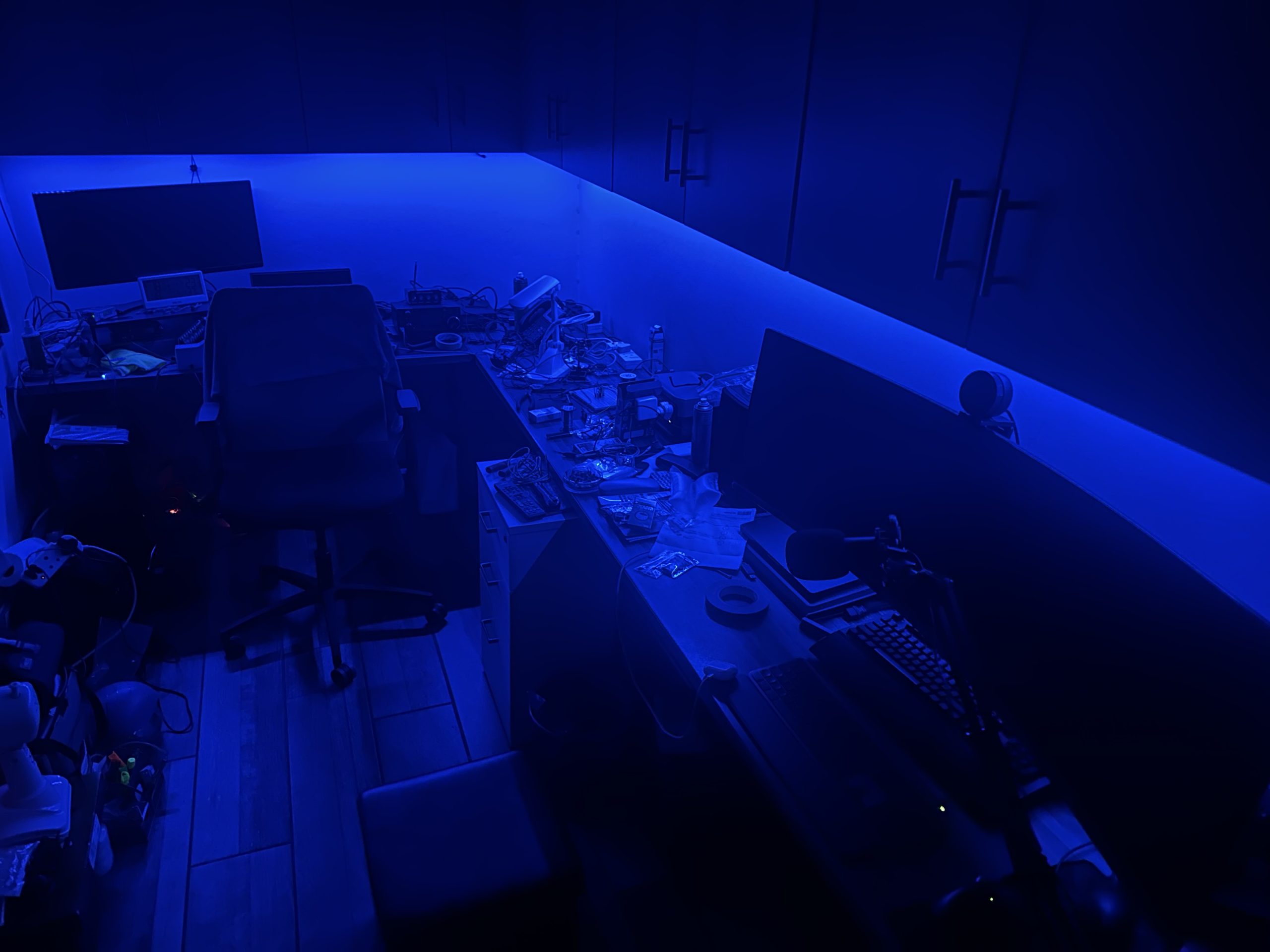
I had a bit of help along the way—my colleague Dwayne has been working with WLED and LED strips for quite some time, and I also picked up some useful tips from YouTube tutorials. Setting up the ESP32 with WLED was straightforward, but the real challenge came when I needed to extend the strip and join two separate lengths: a 2-meter and a 3-meter section.
###The Learning Curve The soldering part turned out to be trickier than expected. My soldering iron was too hot at first, which caused some damage to the strip. Despite how easy the YouTube videos made it look, joining LED strips isn’t always that simple in practice. After several attempts, I finally managed to connect the strips using a short piece of 3-core LED wire.
All in all, it took about three days of trial and error before I had everything working properly. Eventually, I got the ESP32 device, a compact 5V 10A power supply, and the diffuser channels aligned and connected—ready to light up.
Components Used
Most of the main components came from Temu, with the exception of the wiring, which I sourced locally. Here’s the full list with links:
*ESP32/ESP8266 Development Board - High-quality ESP32 series and ESP8266 NodeMCU LUA *Power Supply - MORNSUN 50W AC/DC Switching Power Supply *LED Strip - AOEVK 5.0m Smart LED Strip Lights 5050 RGB+IC *Wiring - 3-core RGB LED Silicone Wire (DIYElectronics)
Software Setup
Loading WLED onto the ESP32 was by far the easiest part of the whole project. There are plenty of tutorials available online, and the process is very beginner-friendly. Once flashed, the software gives you full control over the LEDs with a wide range of effects and customization options.
This project was a great introduction to working with ESP32 devices and smart lighting. While soldering and wiring were a bit of a challenge, the end result was well worth the effort—a fully functional, customisable LED strip setup.